
By Glenn A. Johnson
When I was a kid, reading wasn’t a chore—it was an adventure. We devoured Charlotte’s Web, Treasure Island, Anne of Green Gables, Tom Sawyer, and The Lion, the Witch and the Wardrobe. (And yes, I read The Hardy Boys.)
These weren’t just books for school; they were companions. They made us think, feel, and imagine our way into worlds that shaped who we became.
Today, those same books sit unopened on dusty library shelves. Many kids can scroll for hours but struggle to sit through a single chapter. The question isn’t whether they can read—it’s whether they want to. And increasingly, the answer seems to be no.
One reason is obvious: kids are glued to screens. Phones and computers have become the new parents—digital babysitters that keep them quiet, busy, and distracted. They don’t have to imagine a talking spider or a mysterious wardrobe; TikTok and YouTube do the imagining for them. The glow of the screen offers instant gratification, while reading requires patience, stillness, and curiosity—qualities that the online world doesn’t reward.
But I don’t blame the kids. I blame the adults who let this happen—the parents, the schools, and the culture that surrendered quiet storytelling for noise and notifications. It’s easier to hand a child an iPad than a paperback. It’s easier for teachers to use video clips than to unpack Dickens or C.S. Lewis line by line. We keep lowering the bar to “meet kids where they are,” forgetting that education is supposed to lift them higher.
There’s also a false assumption that classics are “too old” or “too white” to matter anymore. It’s true—our reading lists should reflect more voices, more perspectives, and more lived experiences. But replacing timeless stories with disposable ones doesn’t solve that problem; it just makes reading shallower. The truth is, Charlotte’s Web isn’t really about a pig and a spider. It’s about friendship, loss, and the grace of growing up — things every child still needs to understand.
So how do we bring kids back to the classics? We don’t just assign the books—we connect them to life today. The Secret Garden is about isolation and renewal; imagine reading it alongside discussions of mental health. The Call of the Wild is about instinct and survival—perfect for a generation growing up in an unpredictable world. Even Little Women can spark conversations about ambition, gender, and independence that still matter deeply.
Reading should never feel like punishment. It’s one of the few things that builds empathy, imagination, and focus—three qualities our tech-saturated society is steadily eroding. When a child disappears into a book, they aren’t just learning to read; they’re learning to be alone with their thoughts. They’re discovering that the world is bigger—and sometimes kinder—than what they see on a screen.
I don’t want to sound nostalgic for a world without technology. But I do believe we’ve traded too much of our attention and humanity for convenience. If we want a generation that can think critically, dream deeply, and write clearly, we have to teach them that books still matter—not as relics, but as living voices.
Because when the phone goes dark and the story takes over, a child learns something no app can teach—how to imagine their own future.
————————————
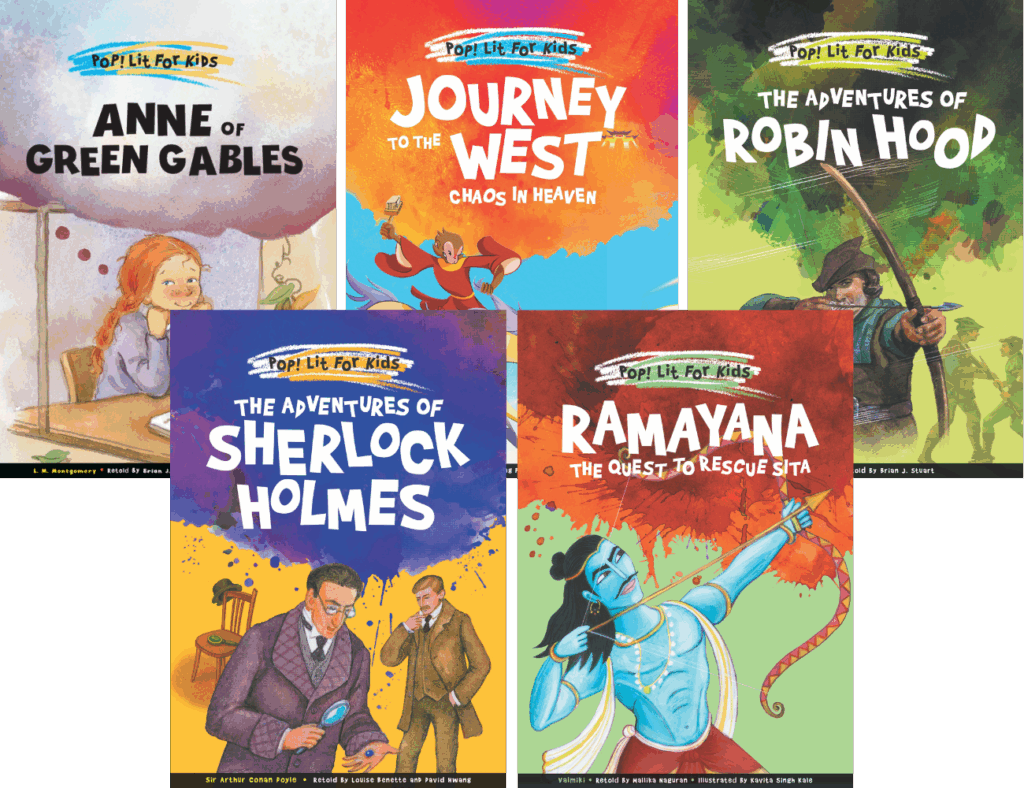
Interested in traditional stories? Check out this series of five reimagined classics from around the world!
Glenn A. Johnson is an accomplished writer, newspaper editor-in-chief, and journalist with a career spanning 40 years. His work with The Canadian Press has appeared in every Canadian daily newspaper. He also wrote for The Wall Street Journal and The Sunday Telegraph in London and spent time in Abu Dhabi as an editor for The National.
Glenn has transitioned his storytelling skills into writing for children’s books. He creates engaging stories that entertain young readers while addressing essential themes like social-emotional learning (SEL), inclusion, and acceptance. As a proud member of the Society of Children’s Book Writers and Illustrators and the Canadian Society of Children’s Authors, Illustrators and Performers, Glenn is dedicated to crafting stories that help children learn, grow, and connect.
Glenn is also an international voiceover artist, musician, and radio host (QCCRFM.COM).
Glenn and his partner Pamela live in Ottawa.